Angular and Tangential Velocity
Unit: Uniform Circular Motion and Gravitation
Prerequisites
Lesson Preview
In circular motion, an object follows a path at constant distance from a center. Examples include a coin on a rotating turntable, the tip of a clock hand, or a stone whirled on a string.
At every instant, the object has a tangential velocity that points along the tangent to the circular path. This is the direction the object is moving at that moment. The radius vector points from the center to the object's current position.
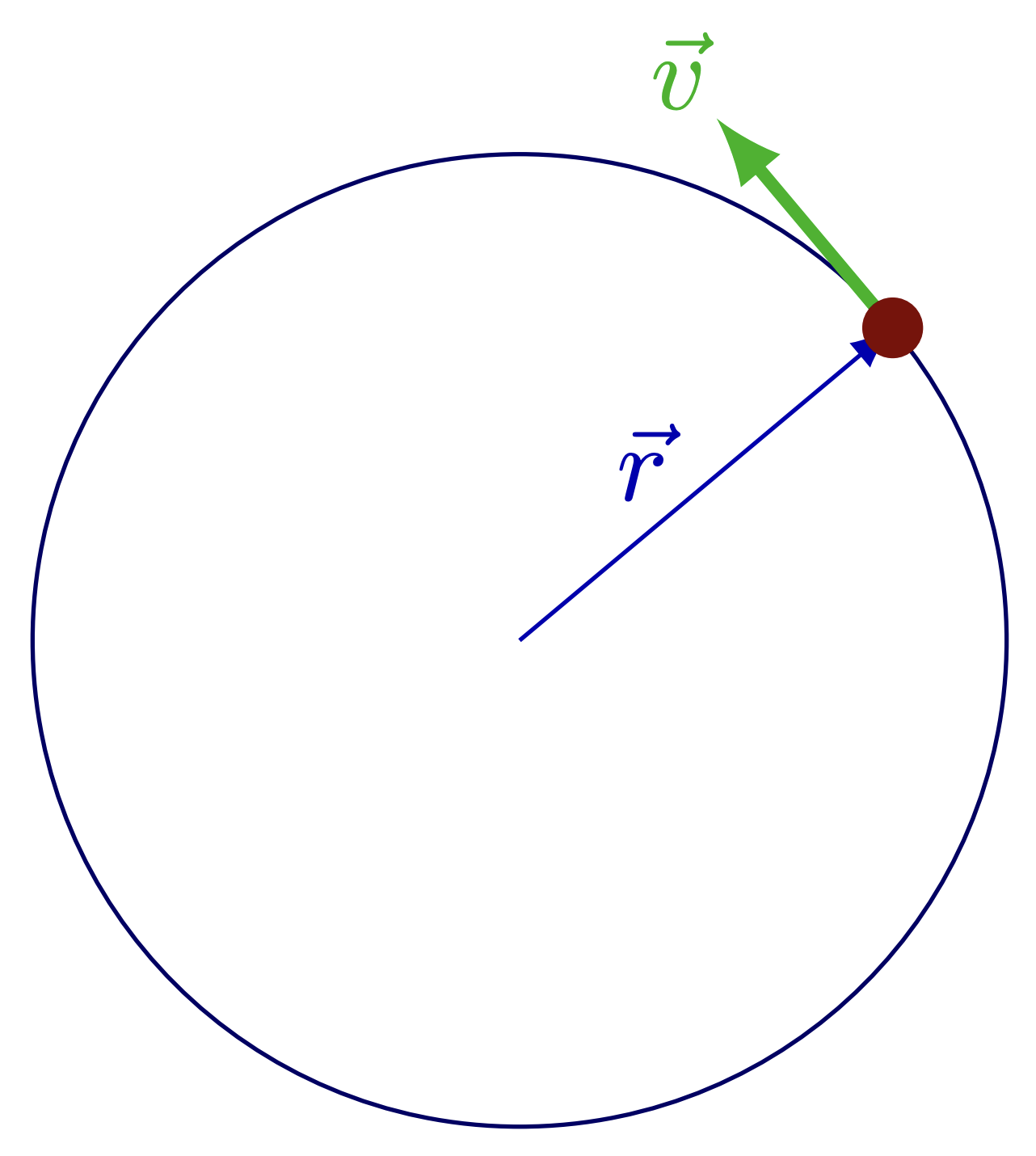
The diagram shows pointing from the center to the object and pointing in the direction of motion. They form a 90° angle.
Why must be perpendicular to ?
Circular motion requires constant radius. The distance from the center never changes.
...
... continued in the full lesson.
Ready to Start Learning?
Sign up now to access the full Angular and Tangential Velocity lesson and our entire curriculum!