Multi-Step Questions
The real world isn’t arranged like a physics or chemistry lesson. Sad, but true!
While lessons give you the foundational concepts and skills you’ll need, multisteps let you tackle harder problems that combine those concepts and skills in a way that’s closer to real life.
How do multisteps work?
Multisteps are complex problems that are placed at the end of each unit. They are broken down into 4-10 steps.
Sometimes we track something like a rocket or a sliding block over multiple phases in order to obtain a final result
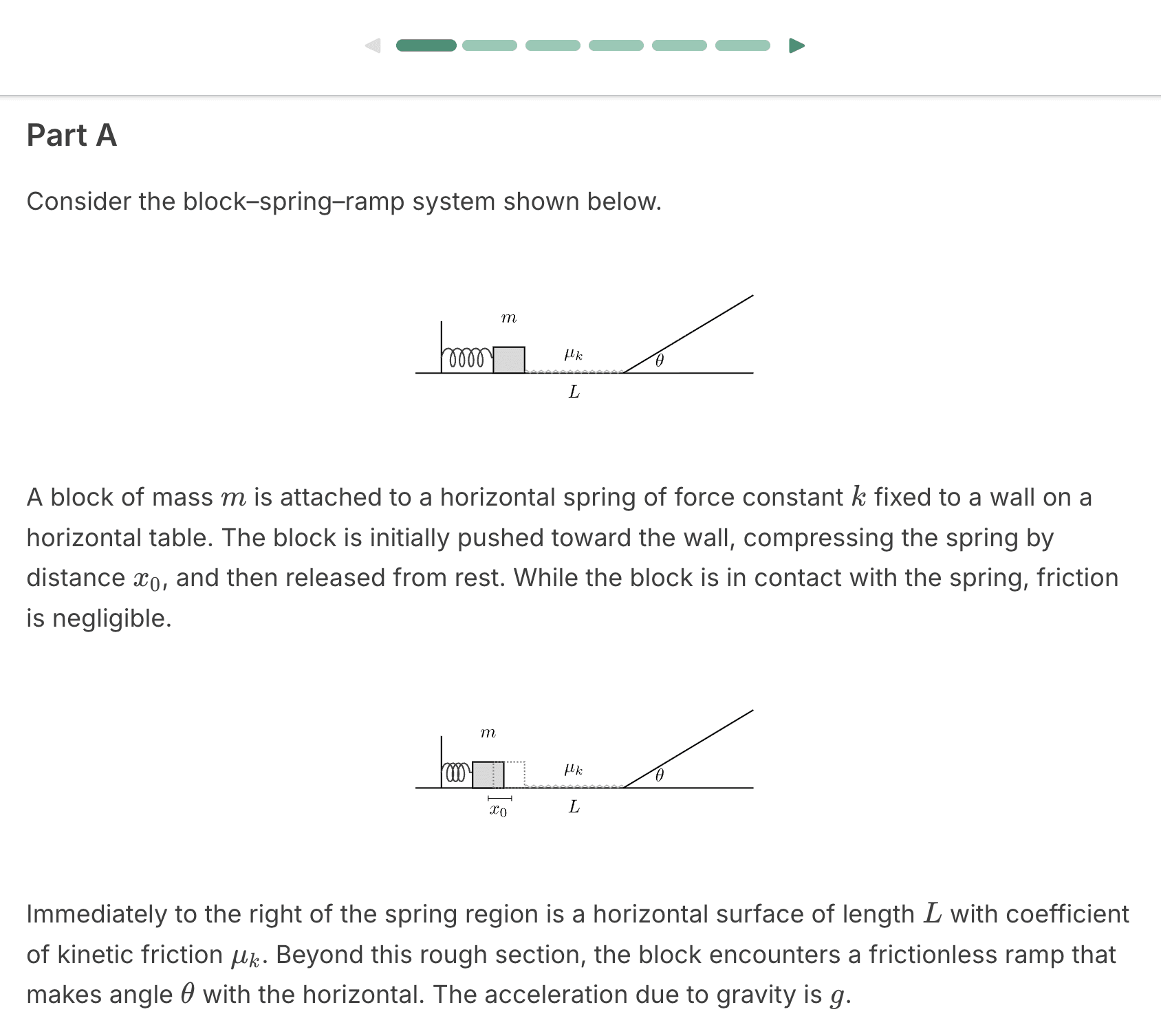
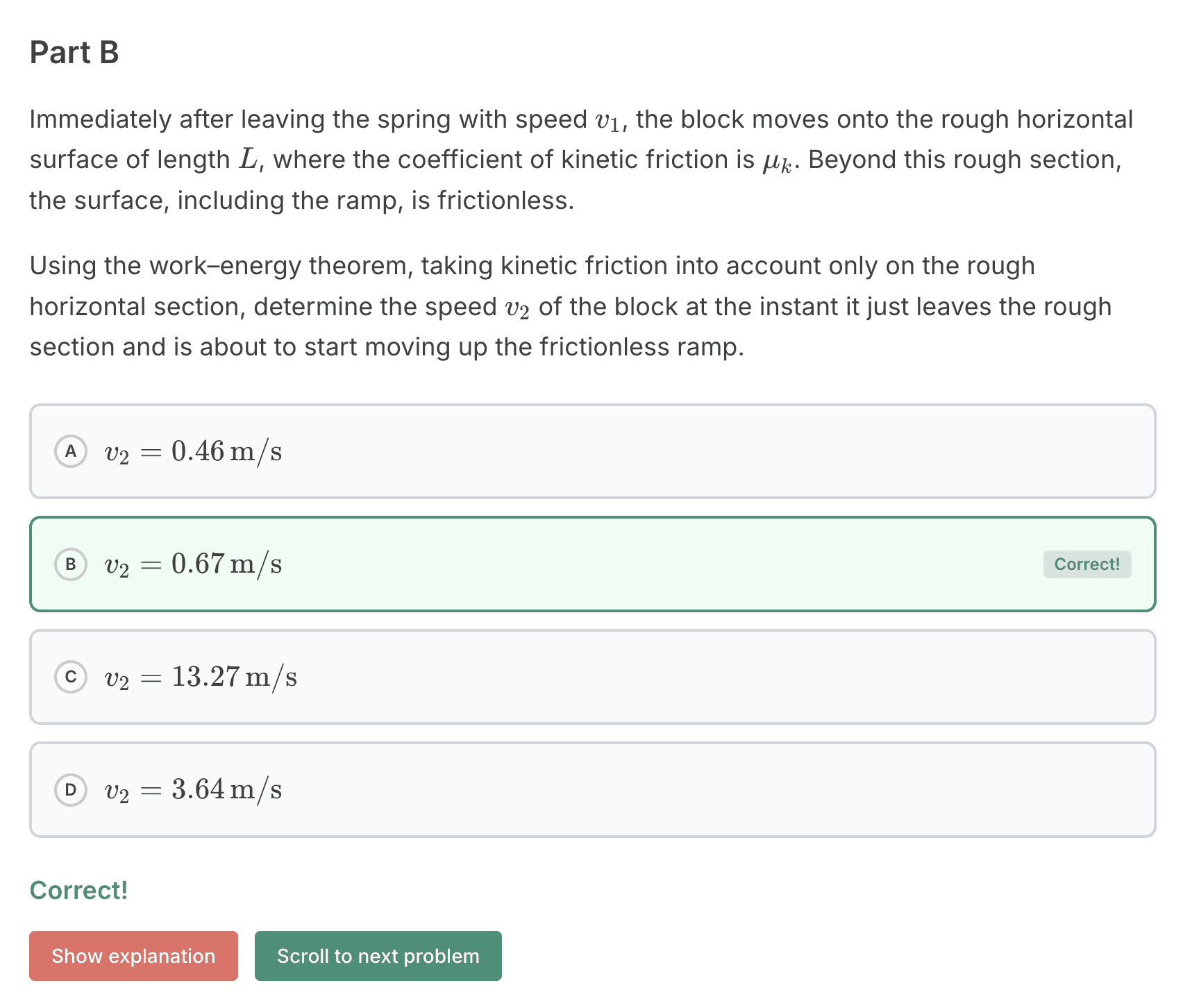
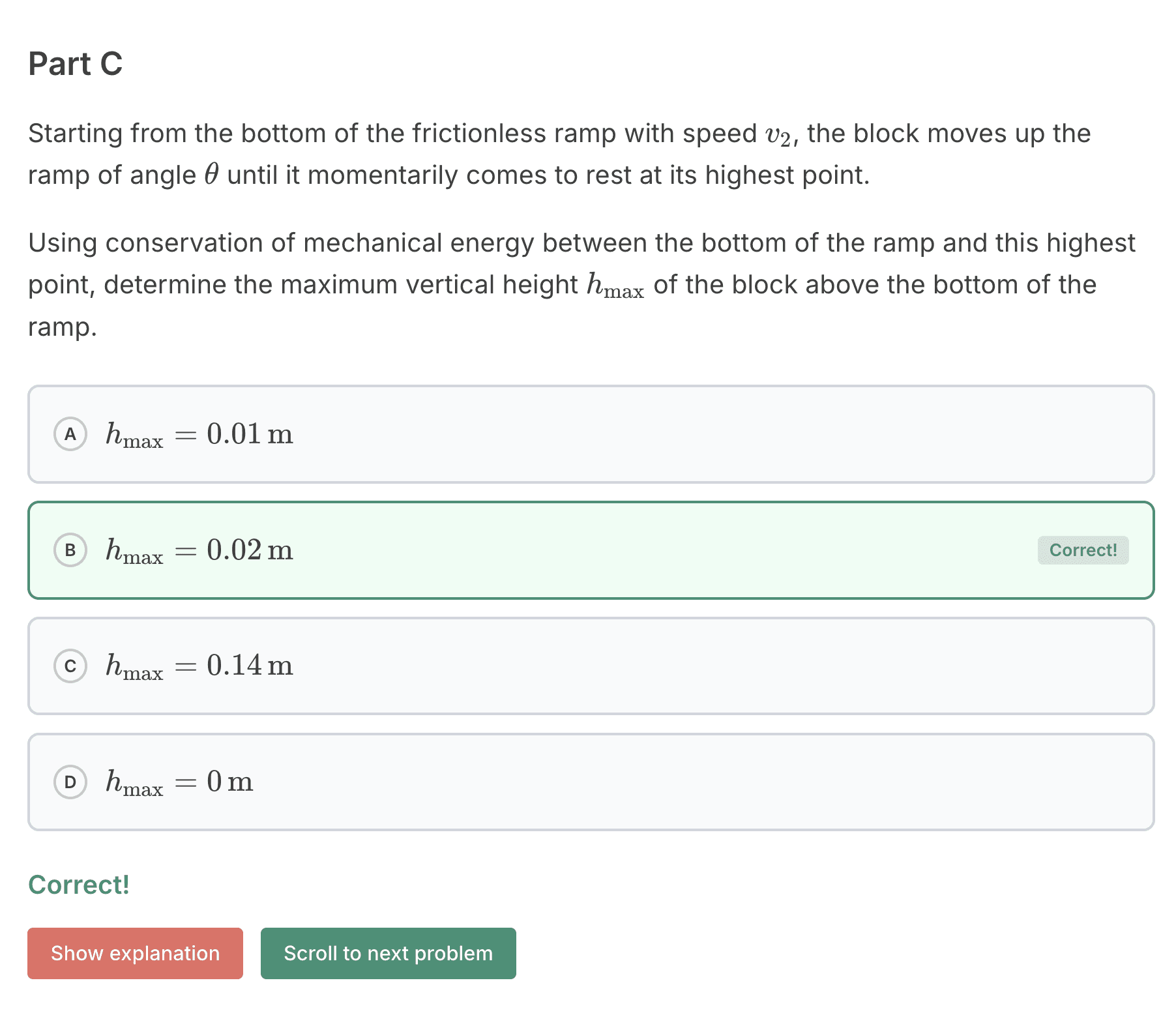
Other times we pick apart a complex scenario:
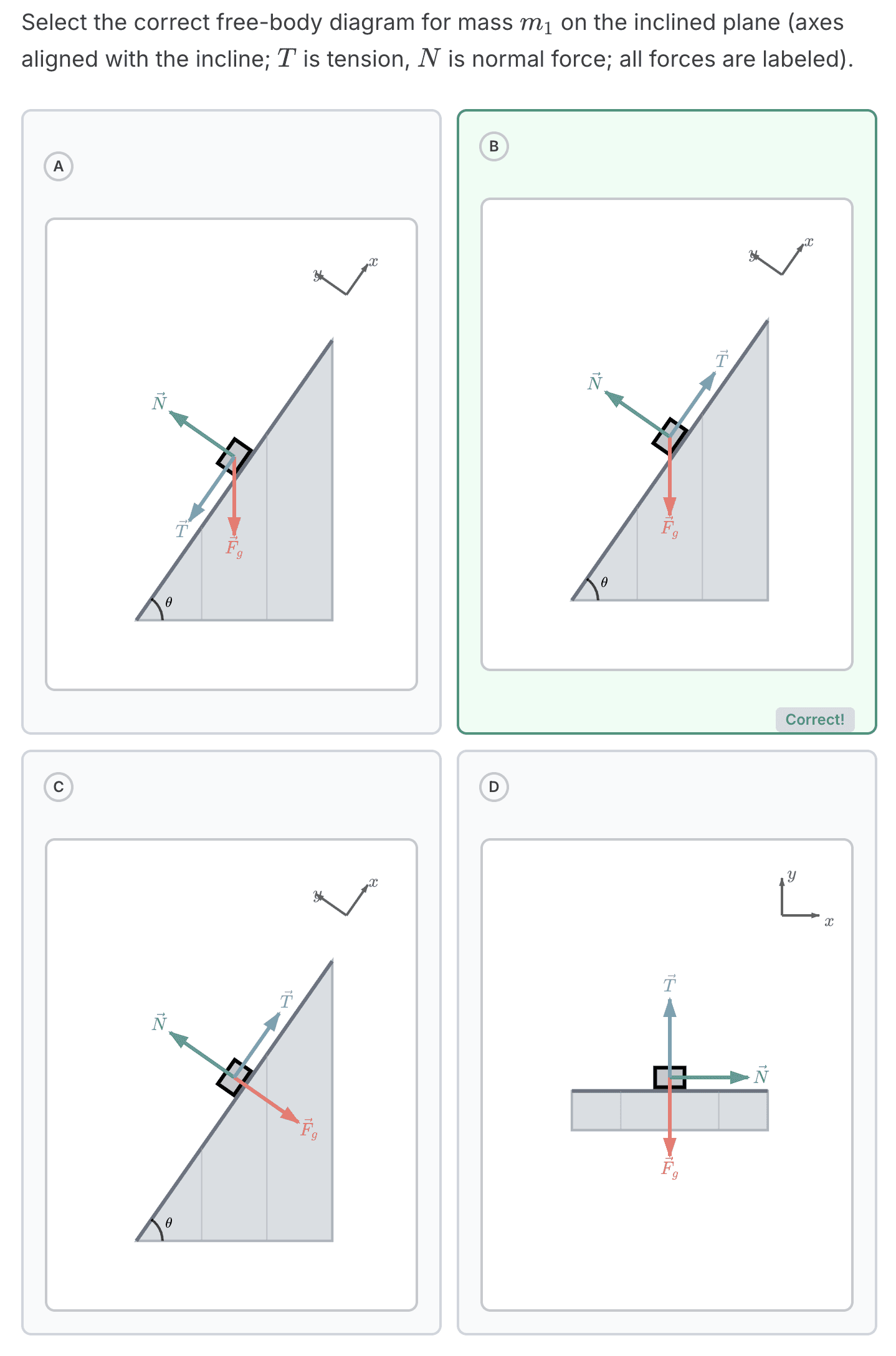
- choose the right free body diagram
- assemble equations for each object in the scenario
- then combine them with actual numbers to get our result.
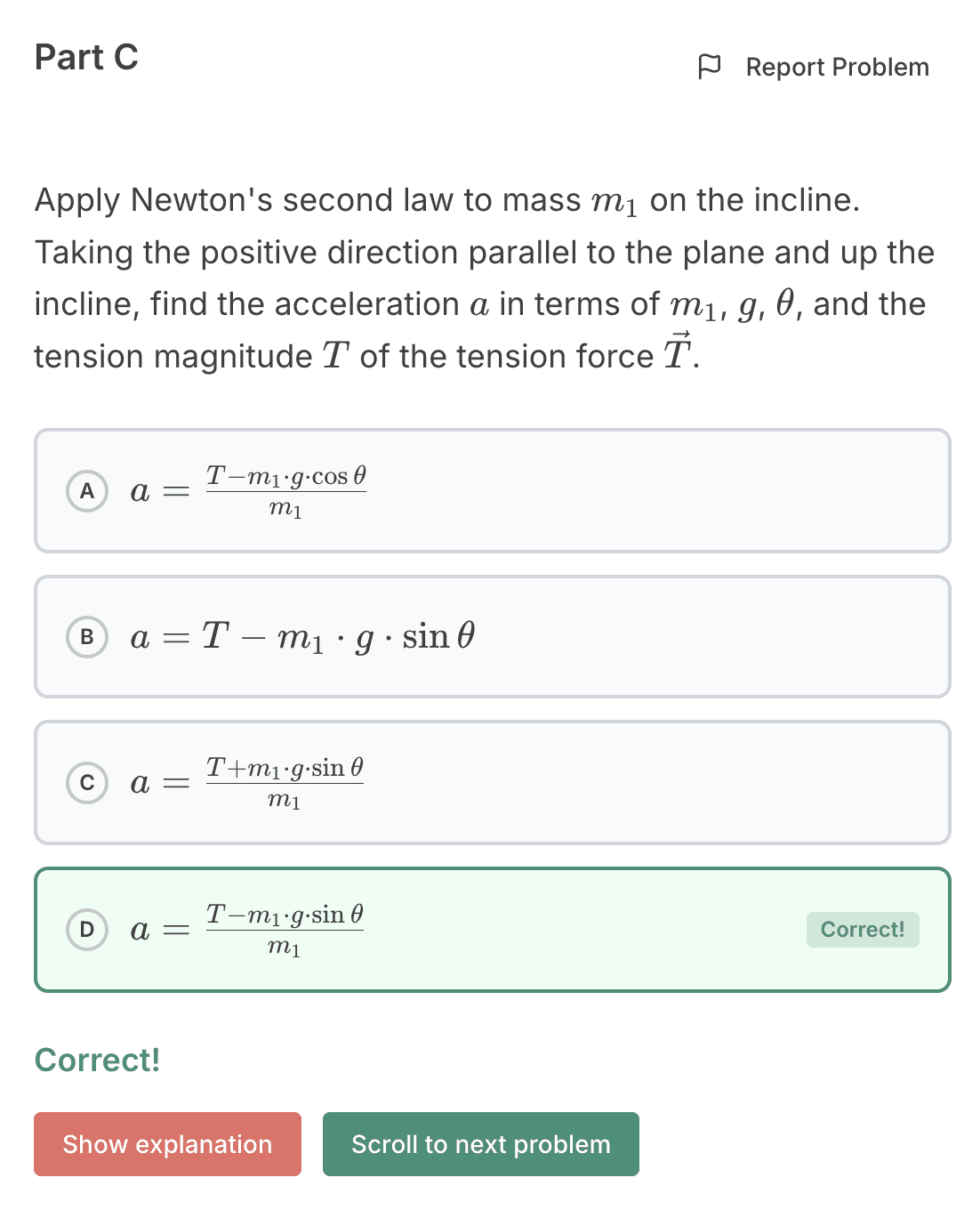
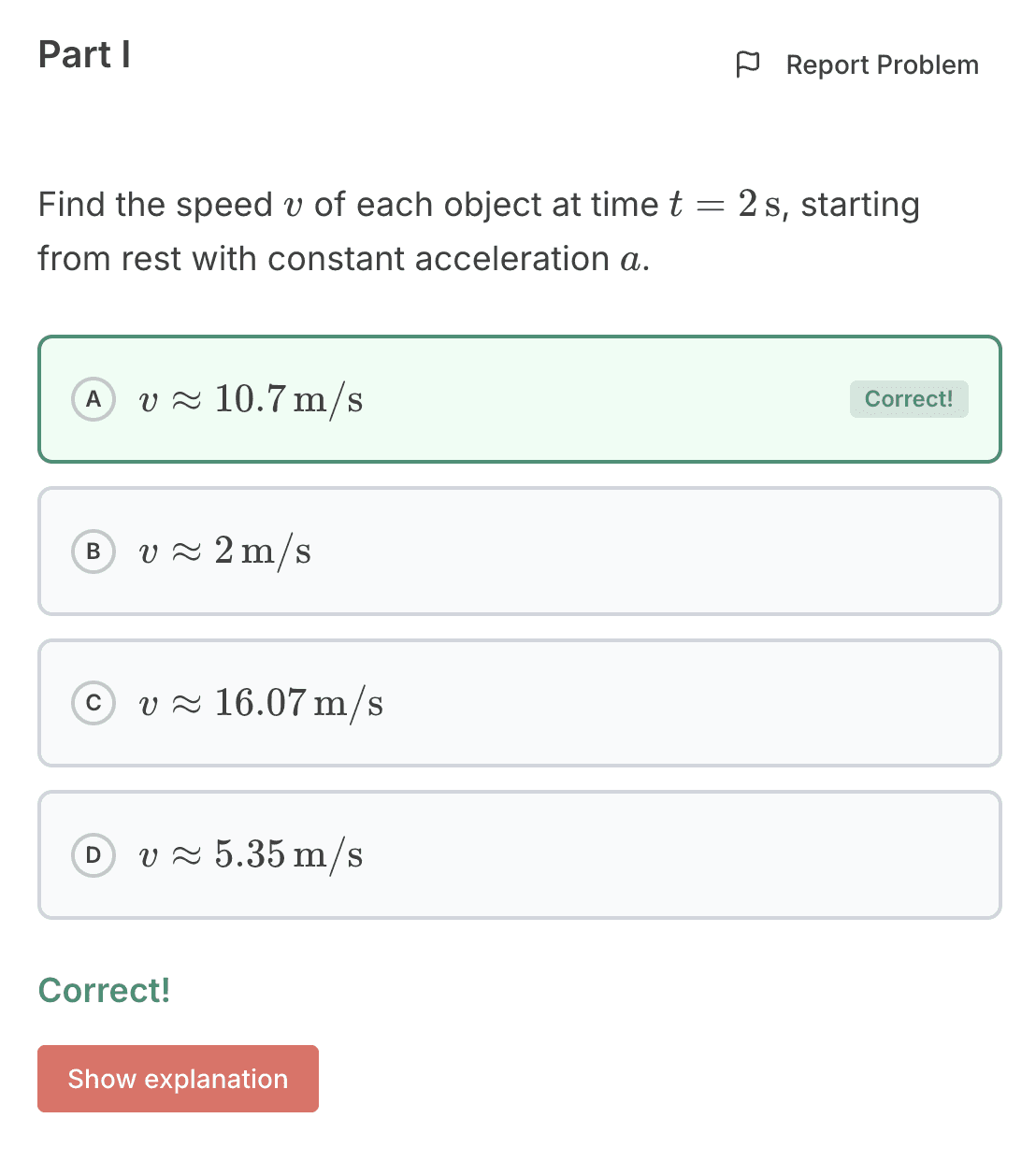
The following example is for two connected blocks on a frictionless incline, connected by a string over a pulley (an "Atwood Machine").
How do multisteps relate to the real world?
It’s true that there are no real-world scenarios where you’ll solve your problem by answering seven multiple-choice questions in a row.
However, these are the first steps towards full independent thinking.
- You get reps in moving through complex scenarios
- You get a feel for how different physics or chemistry concepts can be combined
- Most importantly, when it’s time for you to break down a real-world scenario into easily solvable sub-problems, you’ll have dozens of examples in your head on how to do it
The next step towards full independent thinking (after multisteps) is our Free Response Questions, available to our test-prep subscribers.
I’m just taking a test, why are these necessary?
If your test has complex problems on it, then obviously you’ll want practice solving complex problems.
However, even if your test is 100% multiple choice, with single-topic questions, multisteps let you see more variants on how a physics or chemistry question can be asked. What’s the chances your teacher will choose the exact same question formulation that we give you during the lessons?
By doing the multisteps you’ll not only understand the concepts better, but you’ll have more ‘problem types’ cached in your memory that you can recognize instantly and answer quickly - both in the test, and in later courses.
Build the skills hard problems require.
Start with a 7-day free trial and practice the setup, reasoning, and equation work that turn complex questions into solvable steps.