Unit: Quantum Computing
Later Topics
Lesson Preview
The phase kickback phenomenon is a fundamental technique that appears throughout quantum computing. When we apply controlled operations, phases that would normally appear on the target qubit can instead 'kick back' to affect the control qubit. This surprising behavior turns out to be incredibly useful - it's a key ingredient in many quantum algorithms.
By cleverly using phase kickback, we can encode information about an operation into phases that can then be measured, allowing quantum computers to solve certain problems more efficiently than classical computers.
Let's start with the controlled-NOT () gate. When the target qubit is in the state, something interesting happens:
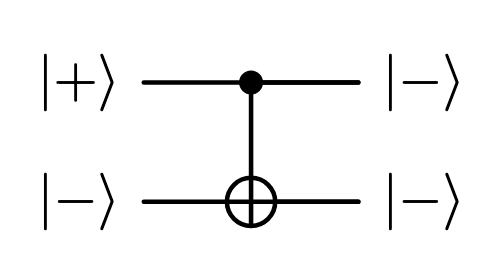
If we trace through the computation:
- Initial state:
- Expanding:
- After :
...
... continued in the full lesson.
Ready to Start Learning?
Sign up now to access the full Phase Kickback lesson and our entire curriculum!