Diagnostic Tests
If you're already halfway through another physics or chemistry course - or if you've "finished" a course that didn't actually teach you correctly - you don't want to start over at the beginning with our curriculum.
That's why we've created a diagnostic test
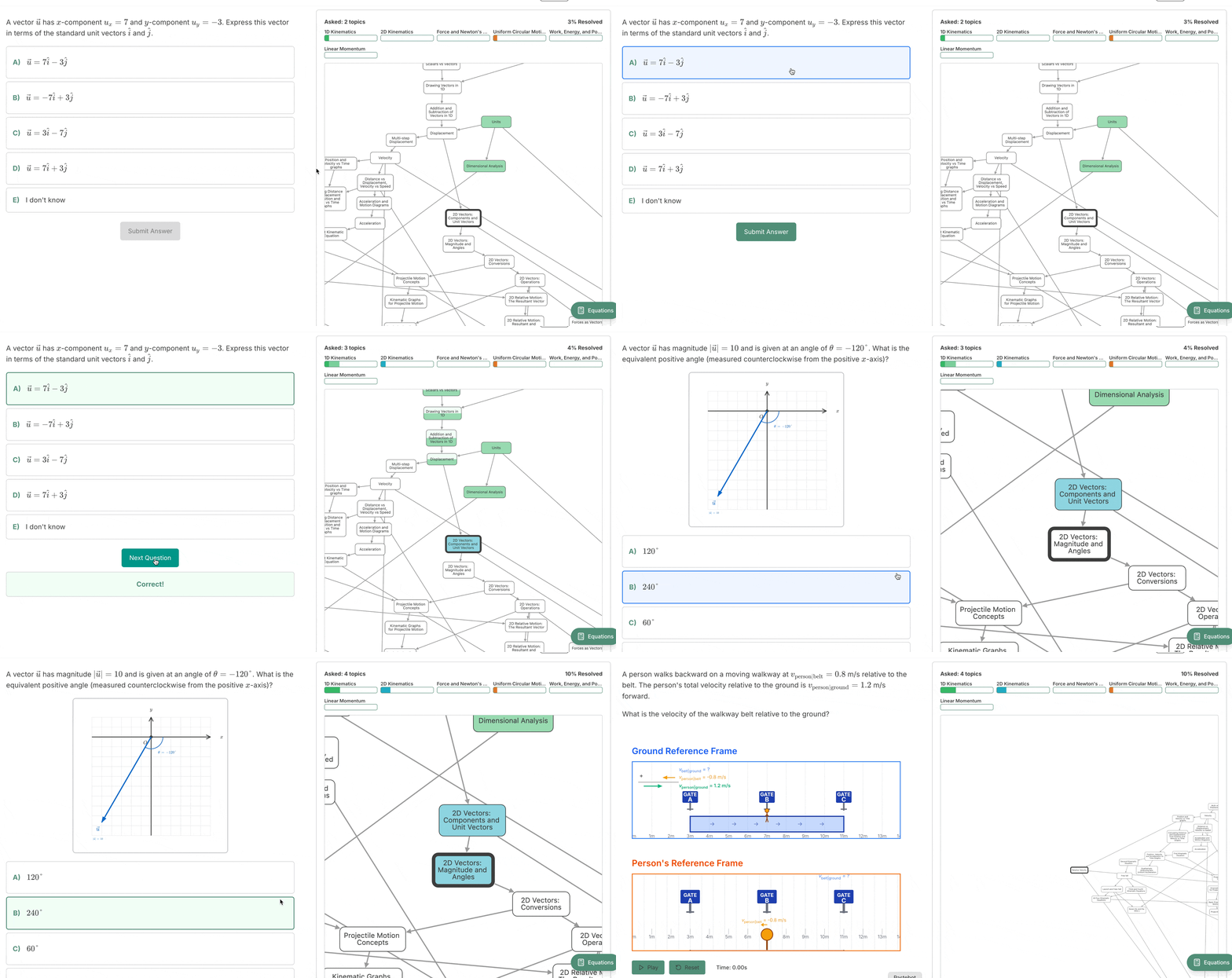
The goal is to quickly and efficiently find your 'knowledge frontier', so you can skip over what you already know - without jumping so far ahead that it's overly difficult.
How the Diagnostic Test Saves you Time
We want:
- An accurate assessment - placing students as close to their real knowledge frontier as possible
- A quick diagnostic - no more than an hour, and ideally less than 30 minutes
- Keep students highly motivated - difficult for an assessment where students may get more questions wrong than right
By using our Knowledge Graph, we can achieve a good balance of the three goals above.
First, we show you a question.
If you answer a question right, it gives you evidence towards you understanding all of its prerequisites - every topic you would need to know in order to complete that question. If you answer a question wrong, it gives evidence towards you NOT understanding everything that depends on it.
For any topic that has two pieces of evidence going either way, we mark it as known or unknown.
If the user answers without cheating or guessing, then in 30-60 minutes the system should have a pretty good idea of where they're at.
How to make your own life Really Difficult
There's a couple ways you can "cheat the system" and end up ruining your own experience.
First, you can look up answers.
If you ask an LLM for help, or even just google formulas and explanations, then you're probably going to end up farther in the course than you should. This will make it so you'll have a harder time understanding what you're learning. Because we tune the course based on what we think you know, you'll end up spending just as much time — or more! — taking the course, and end up with a worse result.
Second, you can guess.
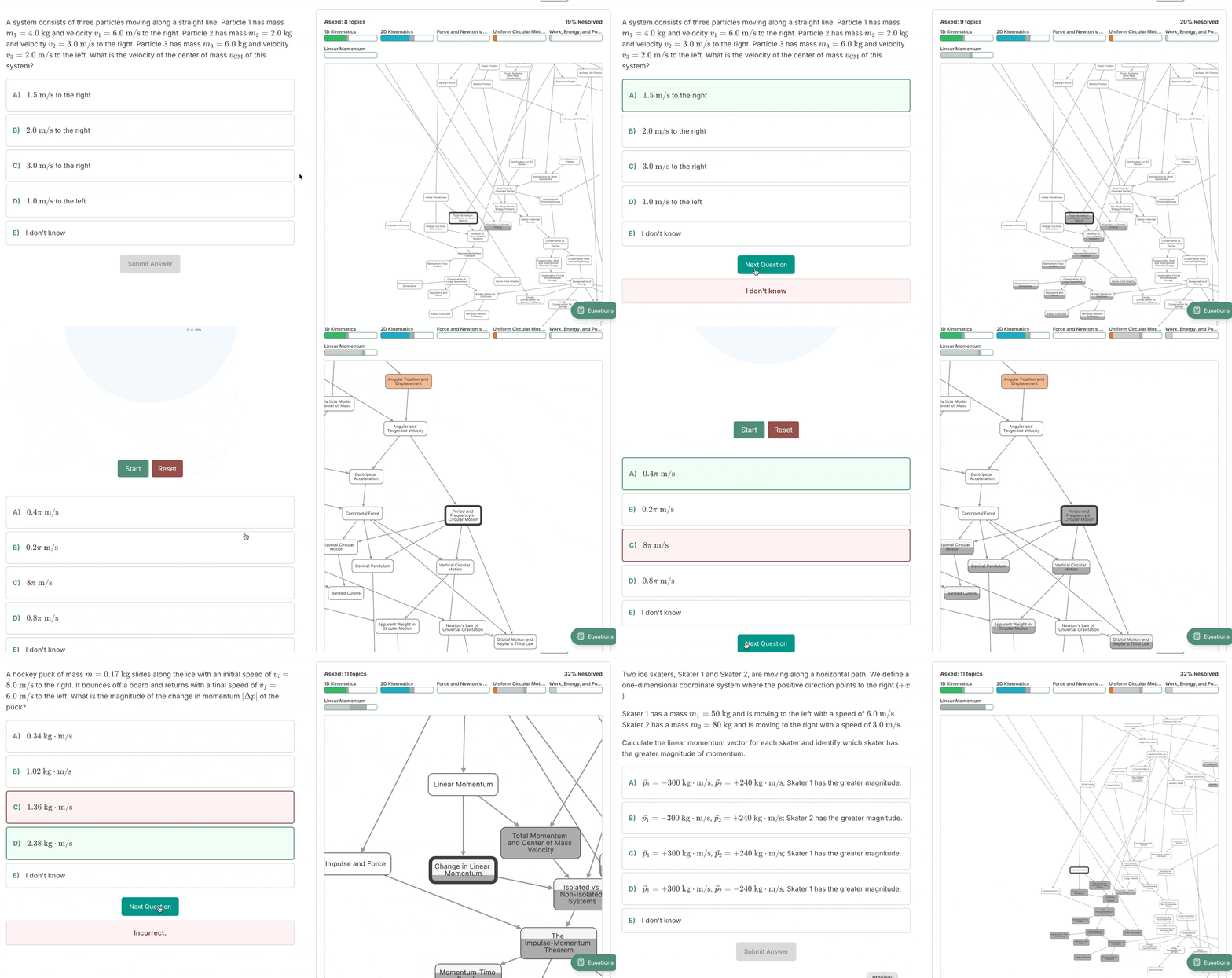
If you choose an answer randomly, and get lucky multiple times, then the system will topics as known that you don't actually know. This is why we have an "I don't know" button. While guessing isn't quite as destructive as cheating, you're still rolling the dice with your knowledge graph.
In order to mitigate the negative effects of guessing, we try to start our questions pretty early in the tree, so that each question only provides positive evidence for a couple other topics. While this makes the test take a bit longer, it's worth it for the accuracy boost.
Can I Skip the Diagnostic?
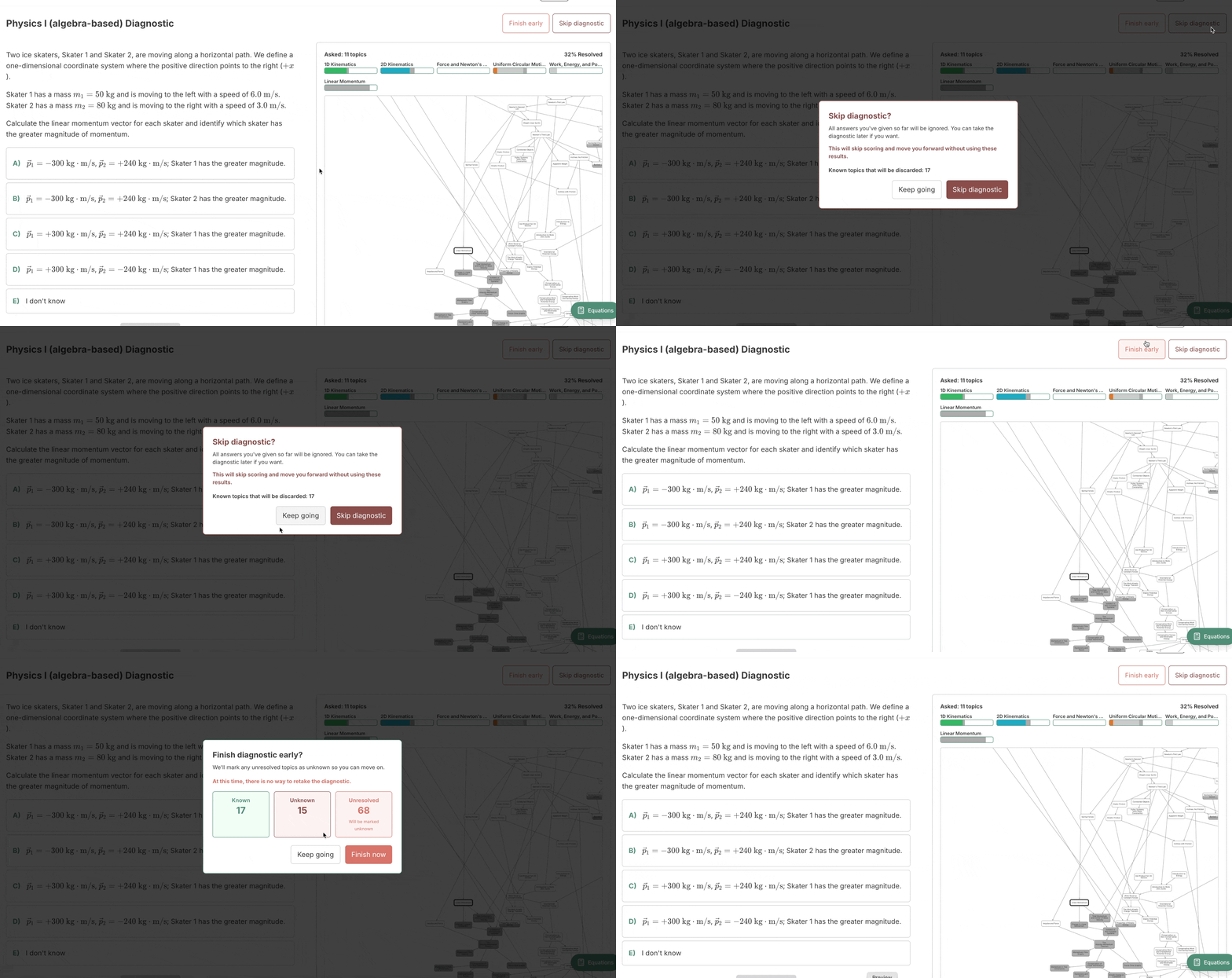
If you want to experience the entire course from the beginning, you can go ahead and do that - it's easy to skip the diagnostic. If you skip, you can take it at any point in the future.
If you're getting frustrated towards the end of the diagnostic, you can also end it early. If you do this, you won't be able to take the diagnostic again in the future, so be careful! But you will be able to skip over all the topics that the diagnostic has determined you already understand.
However, we think that for most people who have had some physics or chemistry experience in the past, taking the full diagnostic is the best option.
Find the right place to begin.
Start with a 7-day free trial and let the diagnostic map what you already know, what is shaky, and what to study next.