Adaptive Review and Spaced Repetition
You will eventually forget almost everything you learn.
However, there are ways to minimize this knowledge decay. The most effective is Spaced Repetition, which models knowledge decay and gives you reviews at the optimum time. Many people swear by Spaced Repetition Systems like Anki, but even more people find them hard to use and suffer from a flood of reviews.
We remove everything that’s annoying about other Spaced Repetition Systems and make it easy to review your physics or chemistry skills at the optimal time. By doing this, you’ll be able to ace your tests and remember the content long-term with a minimum of time invested.
The science of learning (and forgetting) - Spaced Repetition
When you first learn something, you quickly forget it.
When you cover it a second time, you’ll still forget it… but slower.
You’ll eventually forget everything, no matter how many times you review it, but the memory decay becomes much much slower.
Here’s an illustration of the forgetting curves. The exact rates depend on the person and the subject, but the trend here is correct.
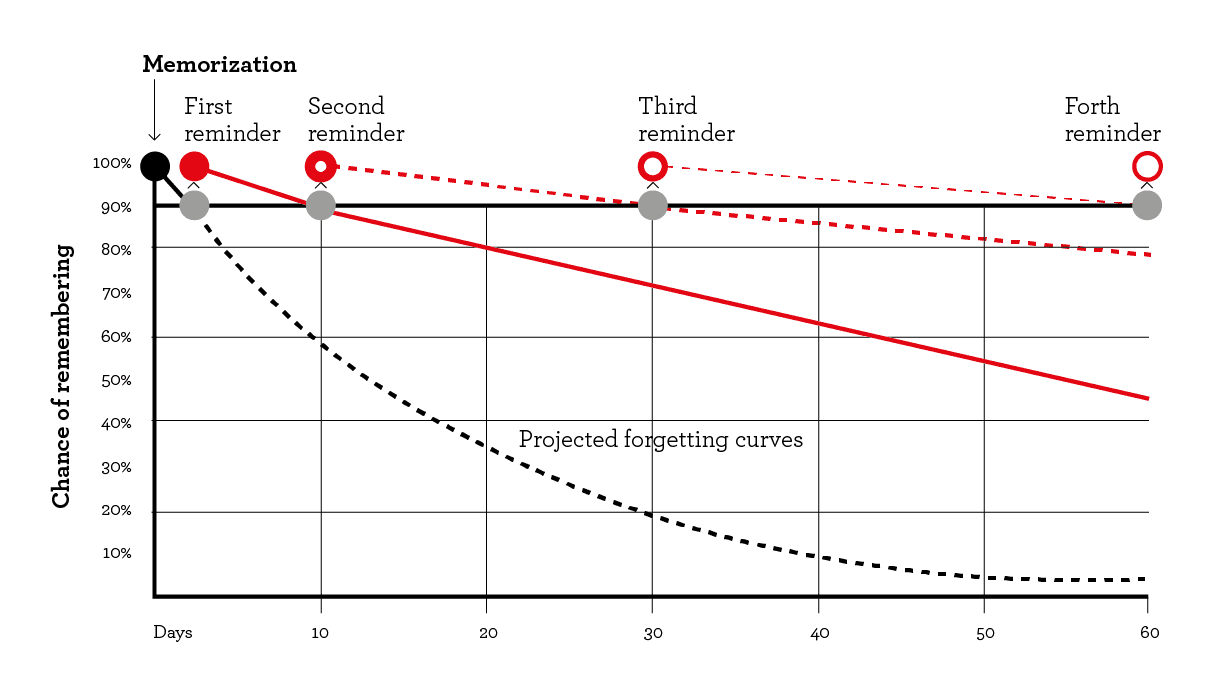
So what you need to do is clear: review what you’ve learned at the exact optimum time.
Why Anki (and other spaced repetition systems) are a bad fit for physics and chemistry
There are systems such as Anki which help you schedule your reviews at the right time. This is great for things like vocabulary words in a second language, or really any set of disconnected facts.
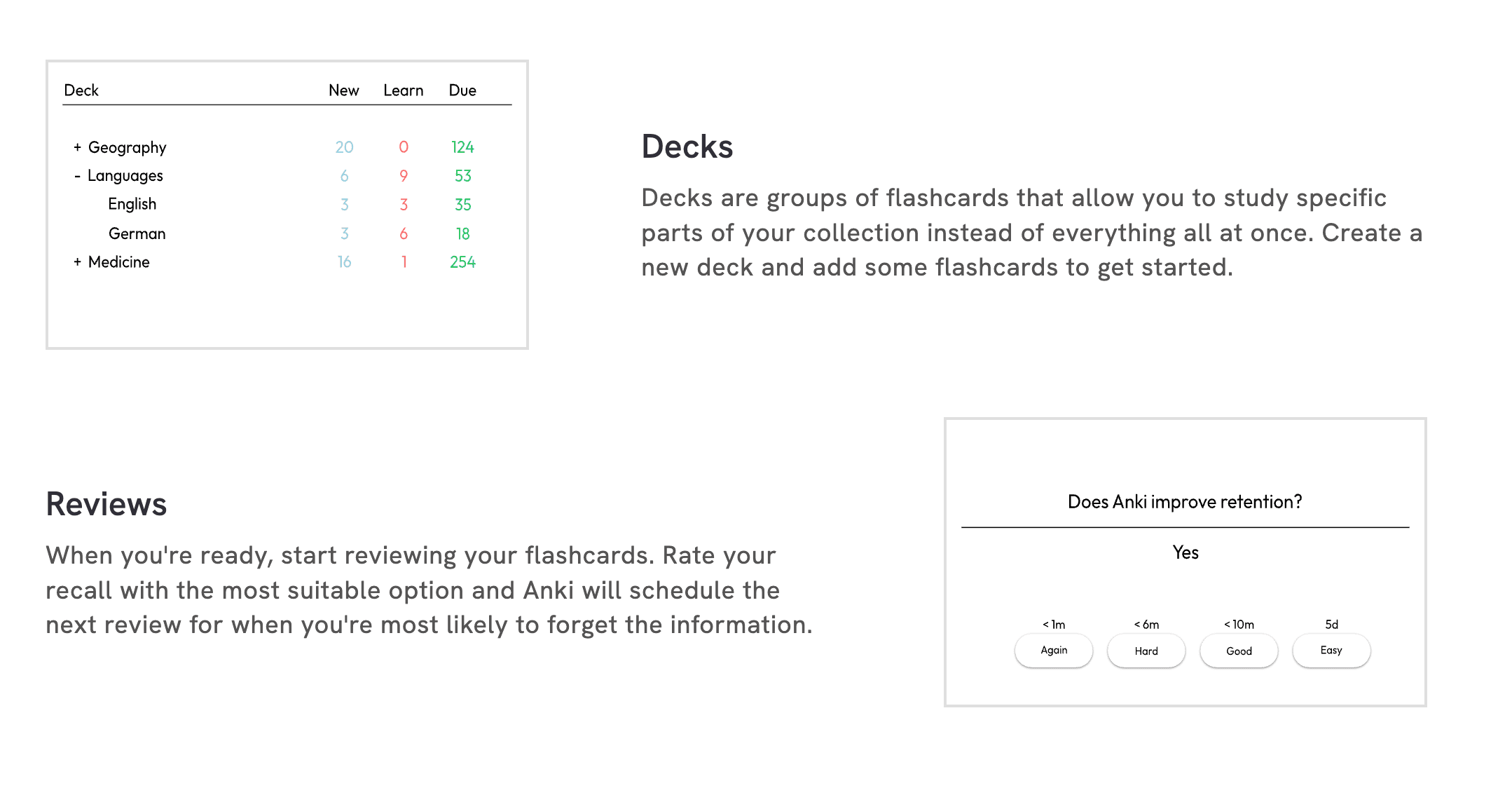
However, it has several problems with physics and chemistry:
- You have to write the cards yourself. Writing good cards is something that takes both time and a certain amount of practice.
- Your cards always present the topic in the same way. There are techniques that spaced repetition enthusiasts have developed to prevent this, but it take even more time to write that set of cards.
- You ignore “implicit review” from harder problems. If you successfully perform a more complicated and difficult version of a skill, that means you can skip reviewing the easier versions of those skills - but Anki has no way to detect those relationships.
I say “Anki” here because it’s the most popular spaced repetition software, but these critiques apply to all general-purpose spaced repetition tools. There's a reason why the examples are always vocabulary, geography, and medicine.
How PhysicsGraph makes spaced repetition easy and efficient
PhysicsGraph solves all of the above problems.
First, we make the problems for you. You don't have to write the cards yourself.
Second, we make a bunch of different problems for each topic. This prevents you from accidentally memorizing the answer instead of understanding the concept.
Finally, we use the knowledge graph to detect implicit review. Whenever you successfully complete a lesson or do a review, it automatically updates the memory of the related topics that are prerequisites for that skill.
MathAcademy pioneered this technique. They call in FIRe - Fractional Implicit Review
All this together means that you can just log in, do your daily XP, and rest easy knowing that you're not going to lose anything that you've learned - and you'll do it all efficiently.
Never forget what you've learned
Start with a 7-day free trial and let PhysicsGraph make sure you remember everything you learn with us.